FIRST AID
Problem
Why?
What to do
Illustration
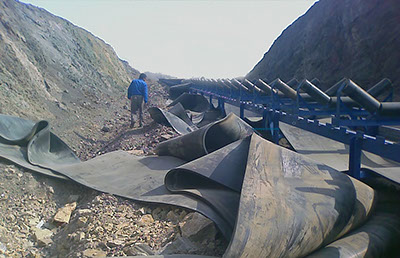
Belt running to one side at a given point
Idler(s) behind a trouble point are not at right angle
Advance the end(s) of the idler(s) in the direction of belt travel.
Blocked idler(s)
Lubricate or replace idler(s)
Crooked conveyor structure
Make corrections
Buildup of material on idlers
Clean, and improve maintenance
Particular section of belt running to one side at all points
Belt not joined squarely
Refasten resp. replace splice
Crooked textile belt
If the textile belt is new, it might straighten out after a couple of days under full load.
Crooked steel cord belt,
because of
- wrong lay of steel cords,
- transverse thickness difference,
- tension difference of steel cords,
- height difference of steel cords.
Measures to be discussed with belt manufacturer.
In most cases, a replacement is inevitable.
Belt runs to one side for a longer distance
Idlers out of square
Align idlers
Off-center material feeding
Adjust chute and loading conditions.
Belt runs off-center around the tail pulley and in the loading area
Misaligned pulley or belt camber
Align the pulley
Dirt build-up on pulley
Clean the pulley or ...
install training idlers
Scraper pressed too hard on belt
Premature wear or abrasion of belt top cover
High speed differential between belt and conveyed material
Material build-up on return idlers
Adjust the scraper
Reconsider chute/feeding layout.
The chute should deliver the conveyed material to the belt as closely as possible to its speed and direction.
Use cleaning device.
Install (some) disc type return idlers
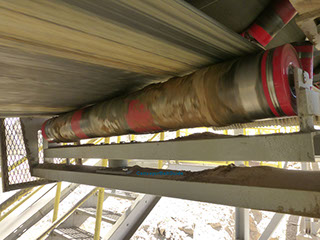
Premature wear or abrasion of belt bottom cover
Dirty, frozen or misaligned idlers
Clean, improve maintenance
Overload in horizontal or convex curves
Align
Transition length too short
Check, and extend, if possible.
Slippage on drive pulley
Check pulley for correct lagging. Consider to use ceramic
Material spillage between belt and pulley
Improve loading conditions. Install plows or scraper before the tail pulley.
Impressions from aggressive ceramic lagging
Replace lagging
Excessive abrasion of pipe belt outer side
Correct position of tilted training idlers.
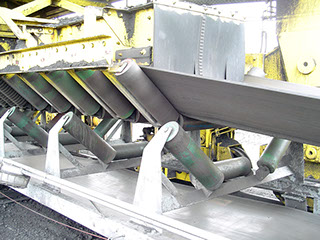
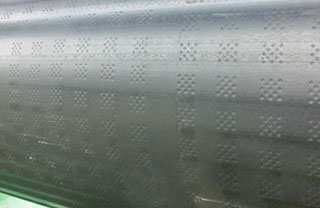
Insufficient traction between belt and pulley
Belt slips
Counterweight too light or blocked
Worn pulley lagging
Increase belt wrap (contact length between belt and pulleys); improve belt cleaning.
Add counterweight or increase screw take-up tension or eliminate blocking.
Replace lagging. Consider to use ceramic.
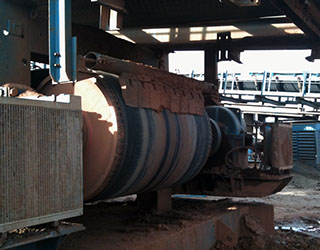
Excessive elongation of belt
Tension too high
Reduce tonnage; reduce counterweight.
Belt strength too low.
Replace by stronger belt
High-elongation carcass
Replace by lower elongation belt, for instance with polyester warp.
Buildup of material on idlers
Clean idlers, improve scraper systems
Splice starting to open
Dangerous. Check splices (X-ray).
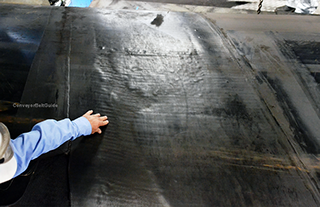
Grooving, gouging of top cover
Skirt board seals are pressed against the belt
Leave enough clearance b etween seal and belt.
Skirtboard seals too hard
Use proper sealing material (no old conveyor belts...).
Material impact
Improve chute design for smoother feeding; install impact idlers.
Material trapped under seals
Install cushion idlers to hold belt up towards skirts.
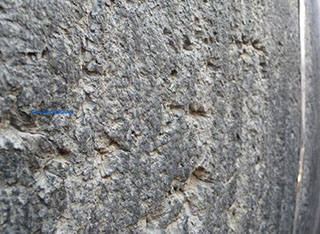
Grooving, gouging of bottom cover
Frozen (or even broken?) idlers
Free the idlers and lubricate them
Material buildup
Install or improve cleaning devices, avoid spillage, improve maintenance
Entrapment
Usually causing longitudinal grooves.
Worn pulley lagging
Replace it
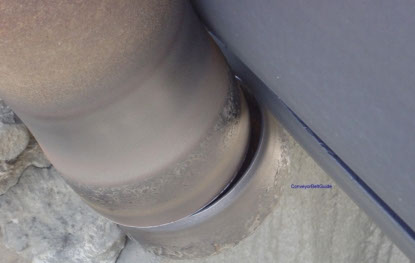
Hard and/or cracking cover
Compound too hard
Compound contains too many sulfur bridges. No repair possible.
Ageing
Sulfur bridges replaced by oxygen bridges. No repair possible
Exposure to heat, temperature of conveyed material is too high
Use high temperature resistant belt type.
Lack of ozone protection
No repair possible. Monitor the crack progression
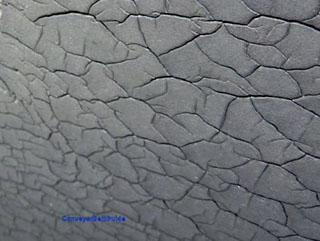
Impact of material falling onto belt, or foreign body clamped between belt and pulley
Holes or breaks in belt
Reduce impact; use cushion idlers; use belt with impact protection system; repair the spots.
If you want to increase strength and thickness of the belt, check the pulley diameters and motor power first
Note: For larger holes check the repair procedure with the belt supplier, because the safety factor may have become critically low.
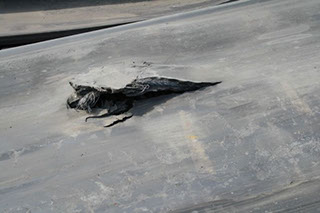
Splice failure
External damage,
improper splice manufacturing
Splice failure is most critical and needs immediate professional care.
In case of damaged steel cords or even excessive movements of steel cord ends (see also "Excessive elongation of belt"), the splice has to be cut out and removed.
Note: For longer, important conveyors it is recommended to have state-of-the-art belt 24/7 scanning by an X-ray system.
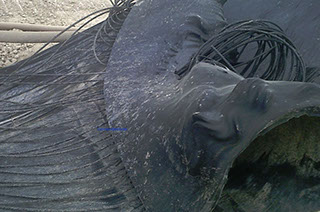
Lack of adhesion or overloading
Cover-ply separatation
Check whether adhesion between cover and carcass of the belt is sufficient and whether pulley diameters are big enough.
Random cracks in the top cover rubber perpendicular to the direction of belt travel can also be an indication of too small pulley diameters.
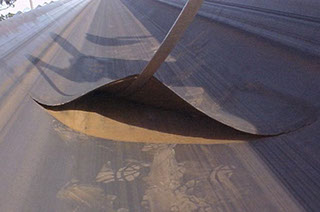
Damage by external body or jammed conveyor part
Longitudinal rip
Usually a cold or hot repair is required. Temporarily, mechanical fasteners may be used.
In many cases, replacement of the belt is unavoidable.
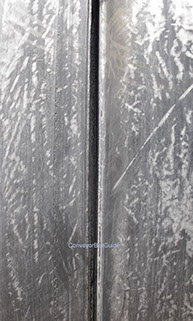
Mistracking belt
Edge damage
Critical especially with steel cord conveyor belts. Adjust pulleys and idlers for straight tracking. Severe damage should be repaired by hot vulcanization.
See animations on top of this page.
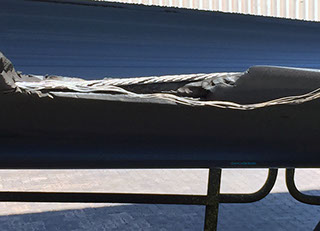
"Other" problems